Generation H Spotlight: Curious, Collaborative, Purposeful — Meet Gideon Amevinya

PhD Researcher | Public Health
In our Generation H Spotlight series, we get to know the people behind the project — their research, experiences, motivations and the perspectives they bring to our shared goal of supporting healthier futures for adolescents.
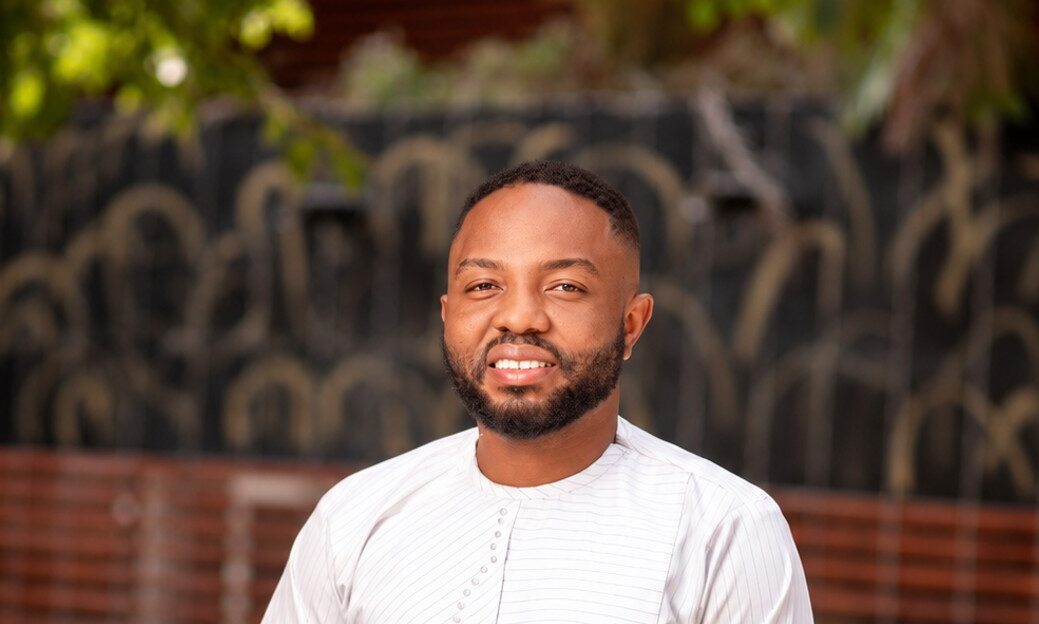
This time, we meet Gideon Amevinya, a Ghanaian public health researcher whose work explores how adolescents in urban Ghana and Kenya can be supported to eat more healthily and become more physically active.
From biochemistry to public health
Gideon’s path into public health has taken a few interesting turns.
He began his academic journey studying Biochemistry, Cell and Molecular Biology before discovering his passion for public health. Looking back, he says these different experiences have shaped how he understands health: not simply as something that happens within the body, but as something strongly influenced by the environments in which people live and the choices available to them.
Today, Gideon is a PhD researcher at L’Institut Agro Montpellier in France, working with the French National Research Institute for Sustainable Development (IRD) through the Generation H project.
His work takes him between France, Ghana and Kenya as he explores an important question: how can we support adolescents in urban Ghana and Kenya to eat more healthily and become more physically active?
Designing solutions with communities
One of the things that attracted Gideon to Generation H was its commitment to working with communities to develop solutions together.
Rather than designing an intervention behind a desk, his research began by examining what previous studies across sub-Saharan Africa had already taught us. He then worked with adolescents, parents, teachers, health professionals and policymakers in Ghana and Kenya to understand their experiences, priorities and everyday realities.
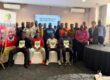
These groups later came together through co-design workshops to develop intervention strategies that reflect local experiences and needs.
“One of my favourite things about this PhD is that the intervention ideas did not come from me. They came from the adolescents and communities themselves.”
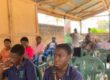
For Gideon, some of the most memorable moments of his PhD have taken place in workshops in Accra and Nairobi. Seeing adolescents confidently contribute their ideas — and watching young people, teachers, parents and policymakers sit around the same table to develop solutions — has reinforced why he chose to become a public health researcher.
Supporting healthier futures for adolescents
Gideon’s research comes at an important time.
African cities are changing rapidly, and adolescents are growing up in environments where unhealthy foods may often be easier to access than healthier alternatives, while opportunities for physical activity can be limited.
He hopes his research will contribute to interventions that are both evidence-based and practical for implementation within African settings.
“If we can create environments that make healthy choices easier, we have the chance to improve not only individual lives, but also the future health of our communities.”
Ultimately, Gideon hopes the research will help inform programmes and policies that create healthier school and community environments and support healthier dietary and physical activity choices among adolescents.
Learning across disciplines and countries
Working within Generation H’s multidisciplinary and international consortium has been one of the highlights of Gideon’s PhD journey.
Through the project, he collaborates with nutritionists, physical activity specialists, behavioural scientists, implementation researchers and colleagues from different countries. Each brings a different perspective to the same public health challenge.
The experience has strengthened his belief that complex health challenges are best addressed by bringing different disciplines, experiences and forms of evidence together.
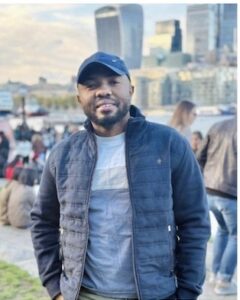
His work has also taken him onto international scientific stages. In 2026, Gideon was among the nominees for the Participatory Research Special Interest Group Best Presentation Award at the International Society of Behavioral Nutrition and Physical Activity conference in Spain, where he presented research on co-designing a multi-component intervention for healthy diet and physical activity.
Growing through the journey
Completing a PhD across several countries has also brought its challenges.
At different points, Gideon has found himself analysing interview transcripts in France while preparing fieldwork in Ghana or Kenya and progressing several manuscripts at the same time. Moving to France also meant adapting to a new culture and a new language.
Although the journey has not always been easy, it has helped him grow into a more confident researcher, facilitator and scientific writer.
It has also taught him resilience — and one lesson that has stayed with him:
Good research is just as much about listening as it is about asking questions.
Alongside his professional growth, Gideon has also experienced an important personal milestone during his PhD: becoming a father.
In his words, life has become “a little busier and a lot more joyful.” His family remains one of his biggest sources of motivation.
Research with a purpose
Looking ahead, Gideon hopes to continue working at the intersection of research, intervention development and practice.
His ambition is to lead research that does not end with academic publications, but goes on to influence programmes and policies that improve people’s everyday lives.
His advice to students considering a PhD — particularly within an international project — is to remain open to opportunities and to the lessons that come from stepping outside their comfort zone.
“Say yes to opportunities, even the ones that feel a little scary. A PhD is not about knowing all the answers. It is about being willing to learn, ask questions and keep going when things do not go as planned.”
And when asked to describe his PhD journey in just three words, Gideon chose:
Curious. Collaborative. Purposeful.
Curious, because asking questions brought him to where he is today.
Collaborative, because his journey has been shaped by working with colleagues and stakeholders across Ghana and Kenya.
And purposeful, because every interview, workshop and manuscript contributes to one shared goal:
Creating healthier futures for adolescents in urban Ghana and Kenya.